


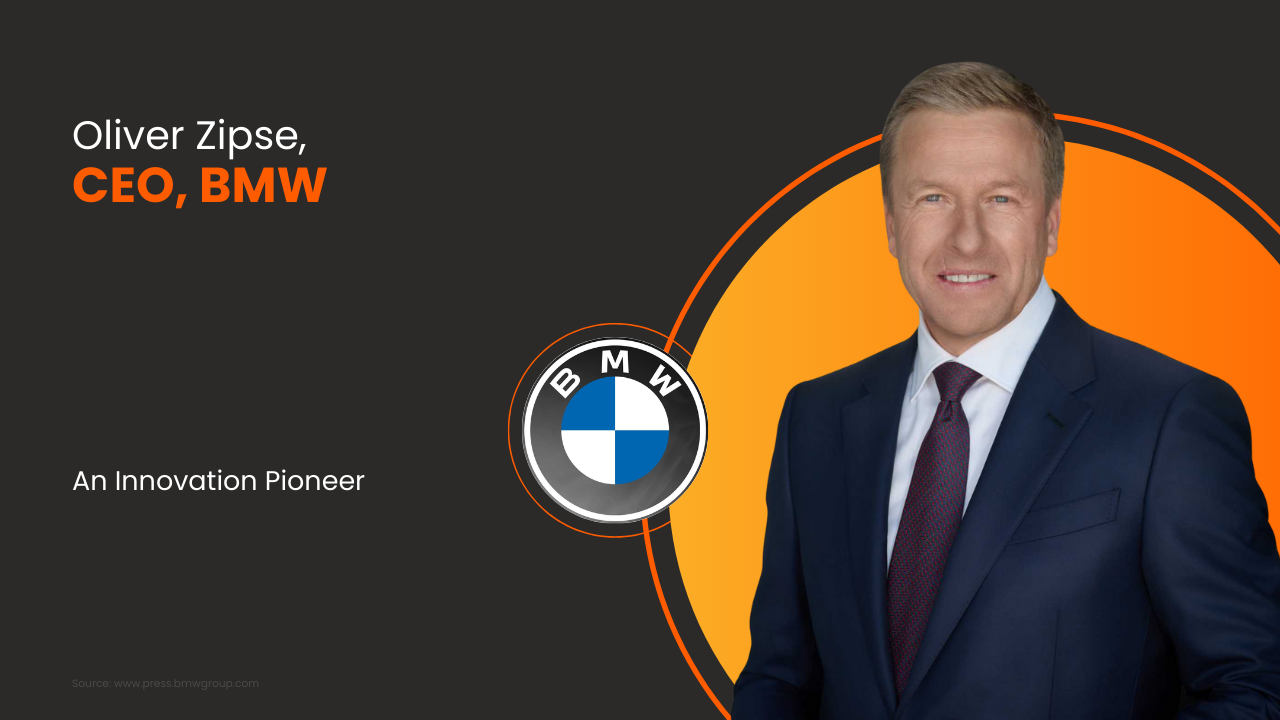
Oliver Zipse is a steady, engineering-focused leader who has guided BMW through major shifts in electrification, digitalization, and global challenges, positioning the company for a strong, future-ready transformation.
Early Life & Education
Oliver Zipse was born on 7 February 1964 in Heidelberg, West Germany. He completed his high school education (Abitur) in Bensheim in 1983. From 1983 to 1985, he studied computer science and mathematics at the University of Utah in Salt Lake City, USA, though he did not earn a degree there. In 1985, Zipse switched to mechanical engineering at Technische Universität Darmstadt and graduated in 1991 with a Diplom-Ingenieur in mechanical engineering.
Later, in 1999, he completed an Executive MBA through the joint Kellogg-WHU program (Kellogg School of Management, USA, and WHU – Otto Beisheim School of Management, Germany).
Career Path & Struggles
Zipse has spent his entire professional career at BMW AG, starting in 1991 as a trainee in development, technical planning, and production. From 1992-1994, he was a project engineer in technology development; then between 1994-2006, he held various leadership roles in development, production, and production planning in Munich and South Africa. In 2007-2008, he served as Plant Manager at the MINI plant in Oxford, UK. Between 2009-2012, he led Technical Planning; later from 2012-2015, he was Senior Vice President of Corporate Planning & Product Strategy. In May 2015, Zipse became a member of the Board of Management of BMW AG, responsible for production. On 16 August 2019, he succeeded Harald Krüger to become Chairman of the Board of Management (CEO) of BMW.
Challenges Zipse has faced include:
Slowing sales in key markets such as China, rising cost pressures, and the heavy financial investments required for electrification and new mobility technologies.
Balancing legacy operations centered on internal combustion engines (ICE) with the demand and infrastructure shift toward EVs, sustainability, and software-defined vehicles.
Tackling global supply chain disruptions (e.g., semiconductor shortages), navigating stricter regulatory changes (CO₂ emissions standards, climate policies), and staying competitive with both traditional automakers and pure EV players.
Products / Initiatives & Year-Wise Moves under Zipse
| Year | Initiative / Product / Strategic Move | Significance |
|---|---|---|
| 2015 | Zipse takes over responsibility for production at the Board level. | Begins setting up BMW’s production flexibility and foundational moves required for later electrification. |
| 2019 | Becomes CEO (August). | Marks shift in top leadership; steers BMW through EV transition and mounting market & regulatory challenges. |
| 2020-2022 | Increased focus on electrification: boosting EV production, improving e-drivetrain tech, investing in battery, software / digital transformation. | Aligns BMW with global trends and regulatory pressure; begins setting pieces for future platforms. |
| 2022-2023 | Announcement of the Neue Klasse platform, a new architecture for EVs and vehicles across drive types. | Signals BMW’s leap into its next generation of vehicle platforms, design, and technology. |
| 2024-2025 | Continued rollout and detailing of Neue Klasse: the first production model (iX3), incorporation of Gen-6 eDrive technology, software upgrade (Panoramic iDrive), improved sustainability commitments. | Demonstrates BMW’s execution on its strategy: integrating tech, ramping EVs, preparing manufacturing & design. |
Achievements
Despite the heavy investment needed for transformation, BMW has maintained profitability and strong margins under Zipse’s leadership.
The company has expanded its global production footprint and is enhancing its product line-up significantly.
With the Neue Klasse, BMW has made technological breakthroughs: e.g., sixth-generation eDrive systems, innovations in battery tech (800-volt, round cells) with energy density and charging improvements.
Introduction of features such as BMW Panoramic iDrive, a redesigned UX/UI/digital nervous system with more computing power and improved software-defined car capabilities.
Oliver Zipse exemplifies steady leadership, engineering rigor, and strategic foresight. From his strong foundation in engineering and management to decades of working through development, production, strategy, and technology at BMW, he has gained a deep understanding of both the company’s heritage and the demands of future mobility.
His tenure has guided BMW through complex challenges: tightening regulatory demands, global supply disruptions, workforce transitions, and balancing traditional combustion-engine business with a rapidly growing electric mobility future.
Looking forward, BMW under Zipse is poised to deliver on its Neue Klasse platform, further expand its EV portfolio, integrate more software and digital capabilities, and deepen its sustainability commitments. If current strategy execution remains on track, Zipse’s legacy will be of a leader who successfully navigated one of the most disruptive periods in automotive history, guiding BMW from its storied past toward an electric, software-driven future.






 WhatsApp
 LinkedIn
 Facebook
 X
X
 Email
Email