


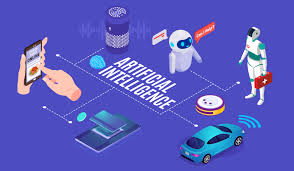
Artificial Intelligence (AI) is no longer just a futuristic concept—it's already embedded in our everyday lives. From voice assistants like Siri and Alexa to personalized recommendations on Netflix and Amazon, AI is working behind the scenes to make our routines smarter, faster, and more convenient. Whether you're navigating with Google Maps, shopping online, scrolling through social media, or tracking your health with a smartwatch, AI is quietly shaping the way we live, work, and play.
When most
people hear the term Artificial Intelligence (AI), they imagine robots,
self-driving cars, or futuristic sci-fi movies. But the reality is much closer
to home. AI isn’t something “coming in the future”—it’s already here, quietly
shaping our daily lives. In fact, you probably interact with AI a dozen times
before breakfast without even realizing it.
From checking
the weather on your phone to binge-watching Netflix at night, AI works behind
the scenes to make life more convenient, personalized, and efficient. Let’s
explore some common ways AI touches our everyday routines.
1. Talking
to Your Phone: Siri, Alexa, Google Assistant
Voice
assistants are perhaps the most visible form of AI in daily life. Have you ever
said, “Hey Siri, what’s the weather today?” or “Alexa, play some relaxing
music”? That’s AI at work.
Voice
assistants rely on Natural Language Processing (NLP) to understand
spoken commands, interpret your intent, and respond in a way that feels
natural. They can do much more than answer questionsthey can set reminders,
make calls, send messages, and even control smart home devices like lights,
thermostats, and security cameras.
Interestingly,
AI assistants learn over time. The more you use them, the better they become at
predicting your needs and habits. For example, your assistant might start
offering traffic alerts before your usual commute or suggesting playlists for
your morning workout.
2.
Navigating the World: Google Maps, Uber, Ola
Whether
you’re driving to work, ordering a ride, or exploring a new city, AI is helping
you get around. Google Maps uses AI to analyze real-time traffic conditions,
construction updates, and road closures to suggest the fastest route. It even
predicts how long a trip will take depending on the time of day.
Ride-hailing
apps like Uber and Ola go a step further. AI determines which driver is closest
to you, predicts your expected arrival time, and adjusts pricing based on
demand. Ever wondered why your ride costs more during peak hours? That’s
dynamic pricing powered by AI.
Even public
transport apps are getting smarter. AI predicts delays, suggests alternate
routes, and optimizes your travel experience based on traffic patterns and
historical data.
3. What to
Watch or Listen To: Netflix, YouTube, Spotify
AI doesn’t
just make life easier it makes it more entertaining. Ever noticed how Netflix
always seems to know what you’ll enjoy next? That’s AI in action. Their
recommendation engine analyzes your viewing habits, compares them with other
users, and serves suggestions tailored just for you.
Spotify works
the same way, curating playlists based on your listening history, time of day,
and even your location. YouTube’s “Up Next” videos use AI to predict what
you’ll want to watch after your current video.
These AI
systems are constantly learning and evolving. The more you interact with them,
the better they understand your preferences, creating a highly personalized
experience that feels almost psychic.
4. Social
Media: Instagram, TikTok, LinkedIn
Scrolling
through social media might feel like casual fun, but AI is running the show
behind the scenes. Your feed is curated using sophisticated algorithms that
track what posts you like, comment on, or watch repeatedly.
TikTok’s For
You Page is a prime example it’s powered by AI that analyzes every swipe,
pause, and repeat to decide what content will keep you engaged. Instagram and
Facebook do similar things, deciding which posts appear first, which ads you
see, and even suggesting connections or groups you might like.
LinkedIn uses
AI to suggest job opportunities, recommend people to connect with, and surface
content relevant to your professional interests. Without AI, social media would
feel less personalized and far less engaging.
5.
Shopping Online: Amazon, Flipkart, Myntra
Online
shopping is another area where AI quietly works in your favor. Ever noticed the
“Recommended for You” section on Amazon? That’s AI analyzing your browsing and
purchase history to suggest products you’re likely to buy.
AI also helps
with inventory management, pricing optimization, and fraud detection. Chatbots
on shopping websites use AI to answer questions instantly, helping you find
products, track orders, or resolve issues.
Some
retailers even use AI to predict trends. By analyzing shopping patterns and
social media activity, AI helps brands decide which products to stock and when
to launch promotions.
6. Money
Matters: Banking and Finance
AI isn’t just
for convenience it also keeps your money safe. Every time you swipe your card,
AI systems scan transactions to detect unusual behavior and prevent fraud.
Banks use AI-driven chatbots like HDFC’s Eva or SBI’s Yono to answer customer
queries instantly, saving time for both customers and employees.
AI also plays
a role in credit scoring. Traditional credit scoring methods rely on static
data, but AI can analyze broader financial behavior to make more accurate
lending decisions. Even investment apps are using AI to suggest personalized
portfolios and manage risk.
Your
smartwatch or fitness tracker is another everyday AI companion. These devices
monitor your activity, sleep patterns, and heart rate, turning raw data into
actionable insights. Some smartwatches can detect irregular heartbeats or warn
you about potential health issues before they become serious.
AI-powered
health apps can suggest workout routines, track nutrition, and even remind you
to take medication. The combination of wearable technology and AI is making it
easier than ever to stay on top of your health.
8. AI in
Education
Even if
you’re a student or lifelong learner, AI is likely helping you learn smarter.
Platforms like Duolingo use AI to personalize lessons based on your strengths
and weaknesses. Online courses can adapt in real-time, suggesting resources to
help you grasp difficult concepts faster.
AI also
powers automated grading and feedback systems, freeing teachers to focus on
creative instruction rather than repetitive administrative tasks.
Wrapping
It Up
AI isn’t a
distant concept it’s already an invisible part of our daily lives. From the
moment you wake up and ask Siri for the weather to the late-night Netflix
binge, AI is constantly learning, adapting, and improving our experiences.
The best
part? Most of the time, we don’t even notice it. AI works quietly behind the
scenes, making life easier, faster, and more enjoyable.
So the next
time you follow Google Maps, shop online, scroll through TikTok, or monitor
your health with a smartwatch, take a moment to appreciate the invisible helper
that is AI already making everyday life smarter and more personalized.









 WhatsApp
 LinkedIn
 Facebook
 X
X
 Email
Email