


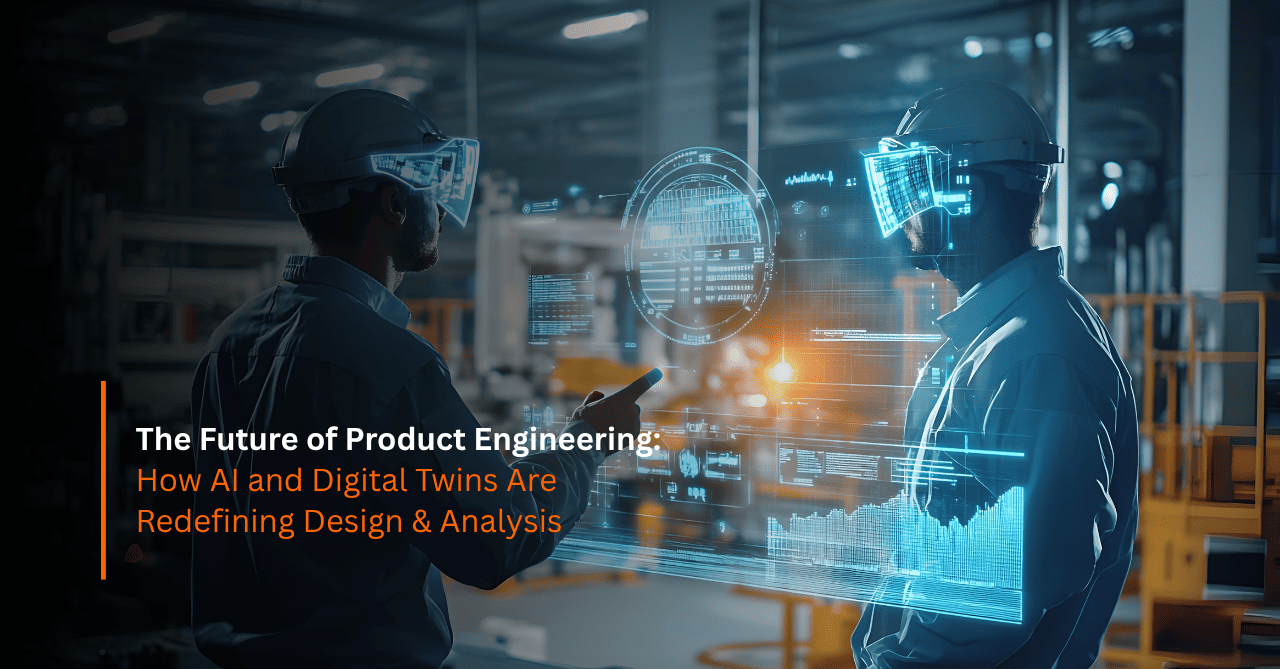
Discover how AI and Digital Twins are transforming product engineering with smarter design, real-time simulation, and faster innovation.
The Future of Product Engineering: How AI and Digital
Twins Are Redefining Design & Analysis
What Is the Future of Product Engineering?
The future of product engineering is driven by Artificial
Intelligence (AI) and Digital Twin technology, transforming traditional
processes into intelligent, data-driven systems. Businesses today rely on
advanced Product Design and Analysis services to improve efficiency, reduce costs, and
accelerate innovation.
Modern Product Design and Analysis service companies use
AI-powered tools and real-time simulations to design, test, and optimize
products before physical production begins. This shift is helping organizations
move faster while maintaining high quality and precision.
How AI Is Transforming Product Design and Analysis
Artificial Intelligence is revolutionizing engineering by
enabling smarter, faster, and more efficient design processes.
Key Benefits of AI in Product Engineering:
- Generates multiple design options using generative design
- Predicts product failures before they occur
- Automates complex simulations and calculations
- Optimizes product performance and material usage
With these capabilities, Product Design and Analysis
services are becoming more predictive and intelligent. Leading Product Design
and Analysis service companies are leveraging AI to deliver innovative
solutions with reduced development time.
What Are Digital Twins in Product Engineering?
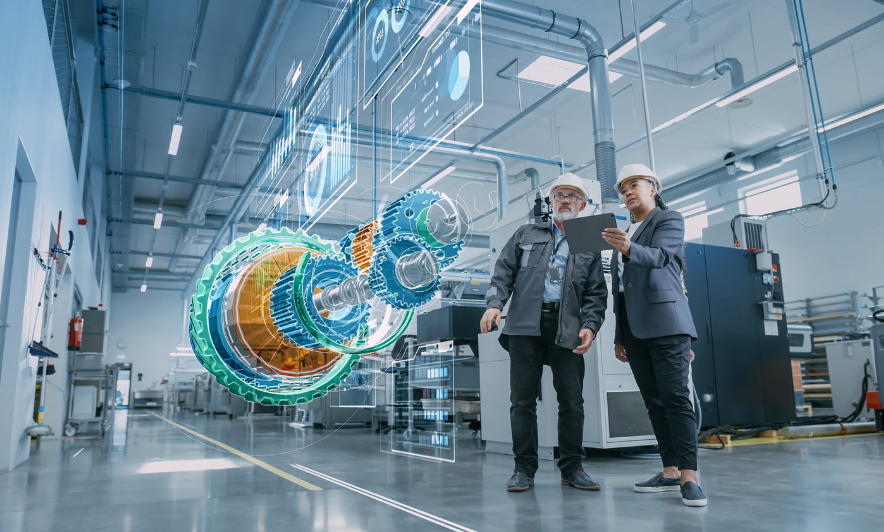
A Digital Twin is a virtual replica of a physical product
that uses real-time data to simulate performance and behavior.
How Digital Twins Improve Engineering:
- Enable virtual testing in real-world conditions
- Reduce dependency on physical prototypes
- Provide real-time performance monitoring
- Improve product reliability and lifecycle management
Digital Twins are a core component of modern Product Design
and Analysis services, allowing engineers to make data-driven decisions
throughout the product lifecycle.
How AI and Digital Twins Work Together
The integration of AI and Digital Twins is redefining design
and analysis processes.
Combined Advantages:
- Faster product development cycles
- Real-time insights and predictive analytics
- Reduced design errors and rework
- Lower prototyping and testing costs
- Improved product quality and performance
This powerful combination enables Product Design and
Analysis service companies to deliver highly optimized and innovative products.
Key Benefits of Product Design and Analysis Services
Businesses adopting advanced Product Design and Analysis
services gain a significant competitive advantage.
Top Benefits:
- Faster time-to-market
- Improved design accuracy
- Reduced development costs
- Data-driven decision-making
- Continuous product improvement
These advantages make Product Design and Analysis service
companies essential partners for modern engineering and manufacturing
organizations.
Industry Applications of AI and Digital Twins
AI and Digital Twins are transforming multiple industries:
- Automotive: Safer, more efficient vehicle design
- Aerospace: High-precision engineering and risk reduction
- Manufacturing: Smart factory optimization
- Healthcare: Advanced medical device design
Energy: Improved system performance and
sustainability
Across these industries, Product Design and Analysis
services are enabling faster innovation and better outcomes.
Challenges in Adopting AI and Digital Twins
While the benefits are significant, companies may face
challenges such as:
- High initial investment
- Integration with legacy systems
- Data security concerns
- Skill gaps in advanced technologies
However, experienced Product Design and Analysis service
companies provide scalable solutions to overcome these challenges and ensure
smooth adoption.
Future Trends in Product Engineering
The future of product engineering will be shaped by
continuous innovation in AI and digital technologies.
Emerging Trends:
- AI-driven autonomous design systems
- Hyper-realistic simulation environments
- IoT-enabled real-time data integration
- Sustainable and eco-friendly product design
- Cloud-based engineering collaboration
These trends will further enhance the capabilities of
Product Design and Analysis services and redefine how products are developed.
How to Choose the Right Product Design and Analysis
Service Company
Selecting the right partner is critical for successful
implementation.
Key Factors to Consider:
- Industry expertise and experience
- Advanced technology capabilities
- End-to-end service offerings
- Scalability and flexibility
- Proven track record of innovation
Top Product Design and Analysis service companies combine engineering expertise with
digital innovation to deliver measurable business value.
AI and Digital Twins are transforming the future of product
engineering by enabling smarter, faster, and more efficient design processes.
Businesses that adopt advanced Product Design and Analysis services can
significantly improve product quality, reduce costs, and accelerate innovation.
As the demand for intelligent engineering solutions grows,
Product Design and Analysis service companies will play a vital role in helping
organizations stay competitive in a rapidly evolving market.










 WhatsApp
 LinkedIn
 Facebook
 X
X
 Email
Email